Best Tax Deductions for Freelancers in 2026: How to Save $5,000+ This Tax Season
Maximize your 2026 freelancer tax deductions with the new One Big Beautiful Bill changes. Home office, QBI, Solo 401(k), and more strategies to keep thousands.
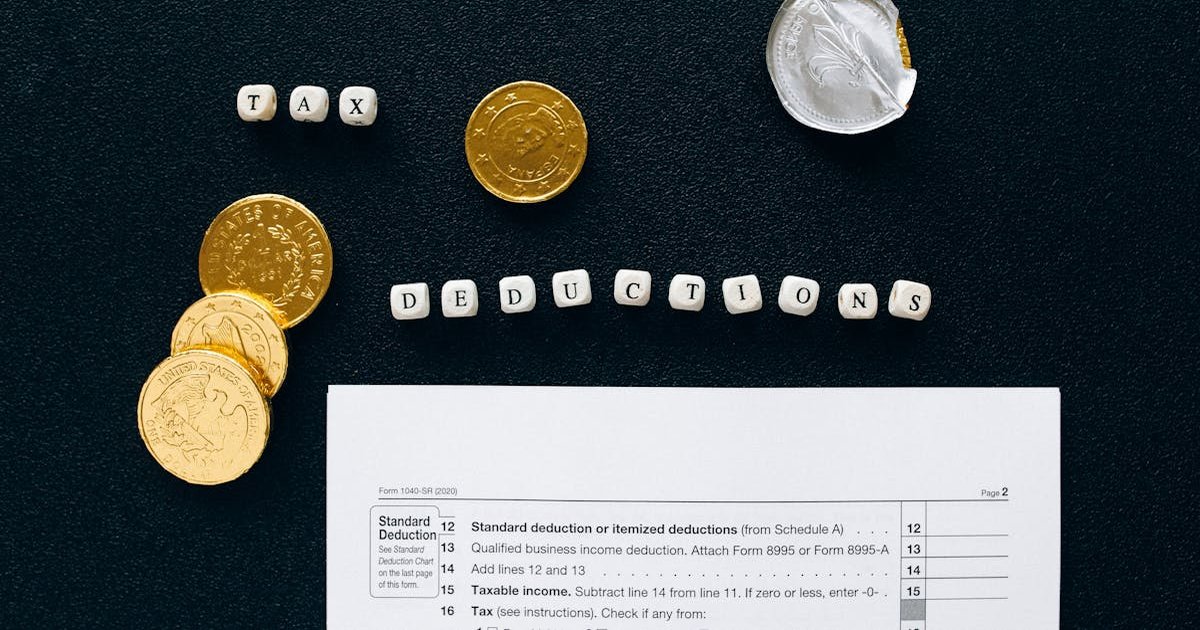
You earned good money freelancing last year. Then you ran the numbers, and your tax bill made you want to crawl under your desk. Sound familiar? For the roughly 73.3 million Americans doing freelance work, tax season is the most stressful time of year — but 2026 is actually different. The One Big Beautiful Bill Act brought real changes that put money back in self-employed pockets, and most freelancers have no idea they qualify.
This guide breaks down every deduction, credit, and strategy available to you right now — with actual dollar amounts, not vague advice.
TL;DR
- The 2026 standard deduction jumped to $16,100 (single) or $32,200 (married filing jointly) — the highest ever.
- The QBI deduction lets you write off up to 20% of net business income before it even hits your tax bracket.
- A Solo 401(k) can shelter up to $69,000+ from taxes if you max both employee and employer contributions.
- New SALT deduction cap of $40,000 benefits freelancers in high-tax states.
- Stacking these deductions properly can save a full-time freelancer earning $100K between $5,000 and $12,000 in federal taxes.
What Changed in 2026: The One Big Beautiful Bill Act
Before diving into individual deductions, here is what is new this tax year. The One Big Beautiful Bill Act, signed into law in 2025, made several changes that directly affect self-employed workers:
| Change | 2025 | 2026 | Impact |
|---|---|---|---|
| Standard deduction (single) | $14,600 | $16,100 | +$1,500 |
| Standard deduction (MFJ) | $29,200 | $32,200 | +$3,000 |
| SALT deduction cap | $10,000 | $40,000 | +$30,000 |
| Section 179 expensing limit | $1,250,000 | $2,560,000 | +$1,310,000 |
| Tips deduction (new) | N/A | Up to $25,000 | New benefit |
The SALT increase alone is a game-changer if you freelance in New York, California, New Jersey, or any other high-tax state. Previously capped at $10,000, you can now deduct up to $40,000 in state and local taxes — but only if you itemize.
The 7 Most Valuable Freelancer Tax Deductions for 2026
1. Self-Employment Tax Deduction (Automatic, ~$7,000+ Savings)
Every freelancer pays the 15.3% self-employment tax (12.4% Social Security + 2.9% Medicare) on net earnings. The good news: you can deduct 50% of your SE tax from your adjusted gross income. On $100K of net income, that is roughly a $7,065 deduction you get automatically.
Action step: This is calculated on Schedule SE. You do not need to do anything special — just make sure you are filing it.
2. Qualified Business Income (QBI) Deduction — Up to 20% Off
The Section 199A deduction lets eligible freelancers deduct up to 20% of qualified business income. For a freelancer netting $80,000, that is a $16,000 deduction — potentially saving $3,500 to $4,000 in taxes depending on your bracket.
2026 phase-out thresholds:
- Single filers: begins at $200,900, fully phases out at $250,900
- Joint filers: begins at $401,800, fully phases out at $501,800
Who qualifies: Most freelancers — writers, designers, developers, consultants, photographers. Specified service trades (law, health, consulting, financial services) face phase-out limits at higher incomes.
Action step: Report on Form 8995 or 8995-A. If your taxable income is under the threshold, you almost certainly qualify for the full 20%.
3. Home Office Deduction
If you use a dedicated space in your home exclusively and regularly for business, you can deduct a proportional share of your housing costs. You have two methods:
| Method | How It Works | Max Deduction | Best For |
|---|---|---|---|
| Simplified | $5 per sq ft | $1,500 (300 sq ft max) | Easy filing, small spaces |
| Regular | Actual expenses x business % | No cap | Larger offices, higher costs |
With the regular method on a 200 sq ft office in a 1,500 sq ft apartment, you can deduct roughly 13.3% of rent, utilities, insurance, and internet. For a $2,400/month apartment, that is about $3,830 per year.
Action step: Measure your office space, take a photo for your records, and file Form 8829.
4. Retirement Contributions: Solo 401(k) and SEP-IRA
This is the single most powerful tax reduction tool for high-earning freelancers. For 2026:
| Account | Employee Limit | Employer Limit | Total Potential | Catch-up (50+) |
|---|---|---|---|---|
| Solo 401(k) | $24,500 | 25% of net SE income | ~$69,000 | +$7,500 |
| SEP-IRA | N/A | 25% of net SE income | ~$69,000 | N/A |
| SIMPLE IRA | $16,500 | 3% match | ~$19,500 | +$3,500 |
A freelancer in the 24% bracket who contributes $30,000 to a Solo 401(k) saves approximately $11,790 in federal taxes — and builds retirement wealth simultaneously.
Best providers for Solo 401(k):
- Fidelity — $0 account fees, $0 per trade, excellent fund selection
- Charles Schwab — $0 fees, strong research tools
- Vanguard — Low-cost index funds, $20/year per fund (waived at $50K+)
Action step: Open a Solo 401(k) before December 31, 2026, to contribute for the 2026 tax year. SEP-IRA contributions can be made until your filing deadline (April 15, 2027, or October 15 with extension).
5. Health Insurance Premium Deduction
If you pay for your own health insurance and are not eligible for an employer-sponsored plan, you can deduct 100% of premiums for yourself, your spouse, and dependents. This is an above-the-line deduction — you get it whether you itemize or not.
Average annual premiums for self-employed individuals in 2026 range from $5,500 to $9,200, making this one of the largest deductions available.
6. Business Expenses: Software, Equipment, and Tools
Every tool you pay for to run your business is deductible. Common freelancer deductions include:
- Software subscriptions: Adobe Creative Cloud ($59.99/mo), Figma ($15/mo), QuickBooks Self-Employed ($15/mo), Notion ($10/mo)
- Hardware: Laptops, monitors, keyboards — deduct via Section 179 or depreciate over 5 years
- Professional development: Courses, books, conferences, certifications
- Internet and phone: Business-use percentage of your monthly bills
- Coworking space: WeWork, Regus, or local coworking memberships (100% deductible)
- Professional services: Accountant fees, legal fees, business insurance
Section 179 for 2026 lets you expense up to $2,560,000 in equipment purchases in the year of purchase — more than enough for any freelancer’s needs.
7. Vehicle and Travel Expenses
If you drive for business (client meetings, co-working commutes, supply runs), track your mileage. The 2026 IRS standard mileage rate is 67 cents per mile. Driving 5,000 business miles yields a $3,350 deduction.
For business travel, you can deduct flights, hotels, 50% of meals, and local transportation — as long as the primary purpose of the trip is business.
How to Stack These Deductions: A Real Example
Meet Alex, a freelance web developer earning $95,000 net in 2026 (single filer):
| Deduction | Amount |
|---|---|
| 50% of SE tax | $6,717 |
| QBI deduction (20%) | $17,656 |
| Solo 401(k) contribution | $20,000 |
| Home office (regular method) | $3,200 |
| Health insurance premiums | $7,200 |
| Software & tools | $2,400 |
| Business mileage (3,000 mi) | $2,010 |
| Total deductions | $59,183 |
Alex’s taxable income drops from $95,000 to roughly $35,817. At the 12% bracket, the federal income tax bill is approximately $3,840 — compared to roughly $12,500+ without any deductions beyond the standard. That is over $8,600 in savings.
(Alex still owes approximately $13,434 in self-employment tax on the original $95K, but the 50% SE deduction and retirement contributions significantly reduce the overall burden.)
Tools to Track Deductions Year-Round
Do not wait until April to scramble for receipts. These tools automate the process:
| Tool | Price | Best Feature |
|---|---|---|
| QuickBooks Self-Employed | $15/mo | Auto-categorizes bank transactions, mileage tracking |
| FreshBooks | $23/mo (Lite) | Invoicing + expense tracking in one |
| Keeper Tax | $16/mo | AI finds deductions from your bank feed |
| Wave | Free | Full accounting for budget-conscious freelancers |
| Everlance | $8/mo | Best-in-class automatic mileage tracking |
Quarterly Estimated Taxes: Don’t Skip Them
If you expect to owe $1,000 or more in taxes, the IRS requires quarterly estimated payments. Missing them triggers underpayment penalties — typically 7-8% annualized interest.
2026 quarterly deadlines:
- Q1: April 15, 2026
- Q2: June 15, 2026
- Q3: September 15, 2026
- Q4: January 15, 2027
Use IRS Form 1040-ES or pay online via IRS Direct Pay. A safe harbor strategy: pay 100% of last year’s tax liability (or 110% if AGI exceeded $150K) across four equal installments to avoid penalties entirely.
FAQ
Do freelancers have to pay the full 15.3% self-employment tax?
Yes, but you deduct half of it (7.65%) from your adjusted gross income, reducing your income tax. The Social Security portion (12.4%) only applies to the first $176,100 of net earnings in 2026. Income above that threshold only owes the 2.9% Medicare tax (plus 0.9% Additional Medicare Tax above $200K for single filers).
Can I take the home office deduction if I sometimes work from coffee shops?
Yes. The IRS requires that your home office be your principal place of business and used regularly and exclusively for work. Occasionally working elsewhere does not disqualify you. However, the space itself must not double as a guest room, playroom, or personal area.
Should I itemize or take the standard deduction in 2026?
Most freelancers take the standard deduction ($16,100 single / $32,200 MFJ) because it is now so high. However, if you live in a high-tax state and your combined SALT, mortgage interest, and charitable contributions exceed the standard deduction — especially with the new $40,000 SALT cap — itemizing could save more. Run the numbers both ways.
Is hiring an accountant worth it as a freelancer?
If your net income exceeds $50,000, almost certainly yes. A qualified CPA or EA typically costs $300-$800 for a Schedule C filing and can identify deductions you miss. The ROI is usually 3x to 10x the cost. Look for accountants who specialize in self-employment or small business.
What happens if I miss a quarterly estimated tax payment?
The IRS charges an underpayment penalty calculated on the amount underpaid for each quarter. The penalty rate is the federal short-term rate plus 3 percentage points (currently around 7-8%). You will not face criminal penalties, but interest compounds until you pay. File Form 2210 to calculate any penalty owed, or let your tax software handle it.
Conclusion
Tax season does not have to drain your freelance earnings. The 2026 tax code — thanks to the One Big Beautiful Bill Act — is actually more favorable to self-employed workers than it has been in years. The higher standard deduction, expanded SALT cap, and continued QBI deduction create real opportunities to keep thousands more of what you earn.
The key is being proactive: track expenses throughout the year, max out retirement contributions before December 31, and pay your quarterly estimates on time. If you do nothing else from this list, at minimum open a Solo 401(k) and claim your QBI deduction — those two moves alone can save a $100K freelancer over $8,000 in federal taxes.
Your future self (and your bank account) will thank you.
Related Posts

7 Best Invoicing Tools for Freelancers in 2026 (Free and Paid)
Stop chasing payments. These 7 invoicing tools automate billing, track expenses, and get you paid faster as a freelancer.
How to Pay Quarterly Estimated Taxes as a Freelancer (2025 Guide)
Confused about quarterly taxes? This step-by-step guide explains who needs to pay, how to calculate your payments, and how to avoid underpayment penalties.